# Why Professional Online Embroidery Digitizing Is the Smart Choice for Modern Businesses
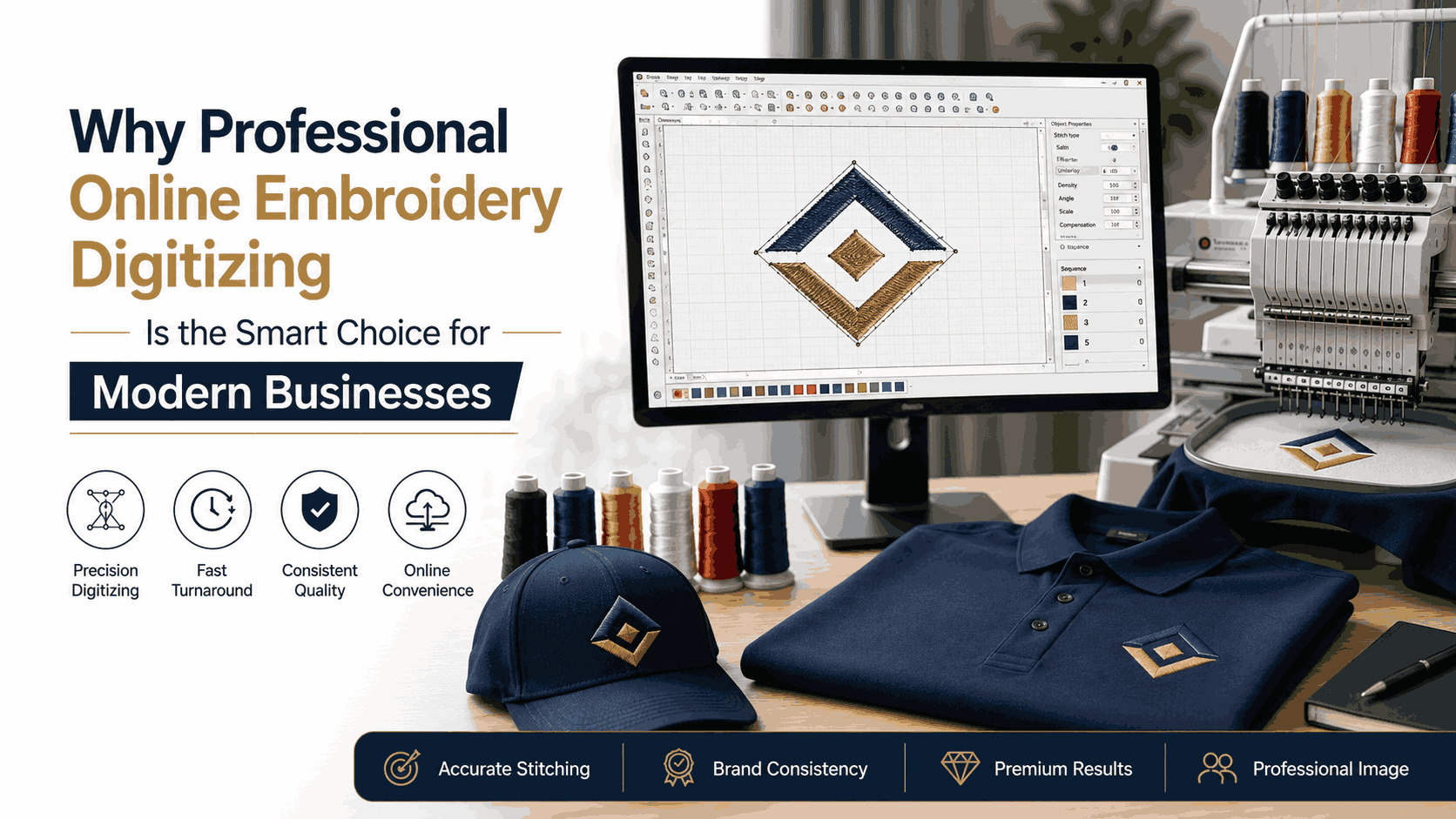
Custom embroidery gives uniforms, caps, jackets, bags, and promotional products a polished and durable appearance. However, the quality of the finished embroidery depends heavily on the digitized file used by the embroidery machine.
A logo that looks perfect on a computer screen may produce uneven stitching, thread breaks, gaps, puckering, or distorted lettering when it is converted without proper technical planning. This is why [professional online embroidery digitizing](https://idigitize.com/) has become an important service for clothing brands, embroidery shops, corporate businesses, sportswear suppliers, and promotional product companies.
Professional digitizers convert artwork into machine-ready stitch files while considering fabric type, design size, stitch density, underlay, sequencing, and embroidery placement. The result is cleaner embroidery, fewer production issues, and greater consistency across repeat orders.
## What Is Online Embroidery Digitizing?
Embroidery digitizing is the process of converting a logo, image, or custom design into a stitch file that an embroidery machine can read.
It is not simply an automatic image conversion. A trained digitizer must carefully plan how the machine will recreate each part of the artwork using thread.
The digitizer determines:
* Stitch types and directions
* Stitch density and spacing
* Underlay settings
* Pull compensation
* Color changes
* Trims and jump stitches
* Embroidery sequence
* Fabric-specific adjustments
Online embroidery digitizing allows businesses to upload artwork, provide production details, and receive the completed embroidery file electronically. Common embroidery file formats include DST, PES, EXP, JEF, VP3, and XXX. The required format depends on the machine and production setup.
## Why Modern Businesses Need Professional Digitizing
Businesses use embroidered products for staff uniforms, corporate gifts, workwear, branded merchandise, sports clothing, school apparel, hospitality uniforms, and promotional campaigns.
In every application, the embroidery represents the company’s visual identity. A poorly prepared stitch file can make even a professionally designed logo appear cheap or inaccurate.
Small lettering may close up, borders may become misaligned, circles may lose their shape, and dense stitching may cause the fabric to wrinkle. These problems can lead to rejected garments, delayed orders, wasted materials, and additional labor costs.
Professional online digitizing reduces these risks by preparing each design according to its actual size, fabric, placement, and production requirements.
## 1. Better Stitch Quality and Cleaner Results
A professional digitizer does more than trace the artwork. Each section of the design is reviewed to determine the most suitable stitch type and sewing direction.
Satin stitches are commonly used for borders, columns, and lettering. Fill stitches are suitable for larger areas, while running stitches may be used for fine details and outlines.
The digitizer also controls stitch angles so different parts of the design remain visually clear. Proper underlay supports the top stitching, improves coverage, and helps secure the fabric during production.
Correct stitch density prevents thin coverage and excessive thread buildup. Pull compensation helps correct the natural movement that occurs when thread pulls the fabric during sewing.
These technical decisions produce smoother fills, cleaner edges, sharper lettering, and more accurate logo shapes.
## 2. Consistent Branding Across Different Products
A company logo may appear on polo shirts, jackets, structured caps, towels, bags, patches, fleece garments, and lightweight performance clothing.
Each material behaves differently during embroidery.
A file created for a flat cotton shirt may not sew correctly on a structured cap. Fleece may require additional underlay to prevent stitches from sinking into the fabric. Lightweight material may need reduced density to avoid puckering.
Professional online embroidery digitizing services can prepare separate versions for different materials and placements. This keeps the logo’s proportions, colors, spacing, and overall appearance consistent while adjusting the stitch construction for each product.
## 3. Faster Turnaround for Urgent Orders
Businesses frequently work with strict deadlines. A company may need uniforms for new employees, branded clothing for an exhibition, or promotional merchandise for an upcoming campaign.
Online digitizing removes the need for physical appointments or local file delivery. Artwork and instructions can be submitted electronically, and the completed file can be returned through email or an online customer account.
Many professional providers also offer rush services for urgent projects. This allows embroidery shops and apparel businesses to process time-sensitive orders without placing additional pressure on their internal staff.
Fast delivery is valuable, but accuracy should remain the priority. A rushed file that has not been properly reviewed may create more delays during production.
## 4. Lower Operational Costs
Hiring a full-time embroidery digitizer may not be practical for every business. An in-house department requires salaries, training, digitizing software, suitable computers, and ongoing quality control.
Outsourcing gives companies the option to pay for digitizing only when it is needed.
This model is useful for:
* Small and growing embroidery shops
* Clothing and uniform suppliers
* Print businesses adding embroidery services
* Promotional product companies
* Fashion brands with changing design collections
* Businesses ordering occasional staff apparel
Professional digitizing may also reduce hidden production expenses. A properly prepared file can require fewer machine stops, fewer trims, less operator correction, and fewer rejected garments.
Paying slightly more for a reliable file can be more economical than using a low-cost file that repeatedly creates production problems.
## 5. Access to Specialized Embroidery Knowledge
Embroidery digitizing requires both creative judgment and technical knowledge.
A professional digitizer must know how different fabrics react under machine tension, how stitch direction affects shapes, how small text behaves, and how sequencing can reduce distortion.
Experienced digitizers also recognize when the original artwork needs adjustment. Thin lines may need to be widened. Tiny lettering may require a simpler font or a larger size. Complex shading may need to be simplified because thread cannot reproduce every detail of a printed image.
A trustworthy provider explains these limitations before production and recommends practical changes. Honest guidance is more valuable than a promise that cannot be achieved with embroidery.
## 6. Support for Multiple Machines and File Formats
Embroidery businesses use machines from manufacturers such as Tajima, Barudan, Brother, Janome, Melco, Ricoma, and Happy.
Different machines and software systems may require different file formats. A professional online digitizing company can usually supply the format requested by the customer.
The provider may also include:
* A thread color sequence
* Final design measurements
* Total stitch count
* Production notes
* A digital embroidery preview
* Alternative machine formats
Receiving the correct file format reduces conversion errors and makes it easier to work with different embroidery vendors or production facilities.
## 7. Easier Business Growth During Busy Periods
Embroidery order volume can change throughout the year. Corporate contracts, school orders, sports seasons, holiday campaigns, and promotional events may cause a sudden increase in digitizing requirements.
An online digitizing partner provides additional capacity without requiring temporary employees or more software licenses.
Businesses can send multiple designs to the provider while their internal team focuses on hooping, machine operation, quality checks, packaging, and order fulfillment.
This flexible system helps growing businesses accept more orders while maintaining consistent production quality.
## 8. Professional Revisions and Quality Control
A digitizing project should not be considered complete until the file performs correctly in production.
Reliable providers usually offer revisions when changes are required for size, fabric, placement, detail, or machine performance.
A professional digitizing company should review the artwork before beginning, verify the final measurements, check the stitch sequence, and inspect the completed file for possible production issues.
Some providers supply a sewn sample image or digital preview. When a problem occurs during production, they may request a photograph of the embroidered sample so they can identify whether the issue is related to digitizing, stabilizer, hooping, thread tension, or fabric movement.
Revision support gives businesses confidence that assistance remains available after the file has been delivered.
## How Professional Digitizing Improves Production Efficiency
An efficient embroidery file is planned to reduce unnecessary machine movement and interruptions.
The digitizer can arrange the design elements in a logical sewing sequence, reduce excessive jump stitches, limit unnecessary trims, and avoid sewing over completed areas when possible.
Good file planning can provide several production benefits, including faster machine runs, fewer thread breaks, reduced manual trimming, better registration, less fabric movement, and more predictable repeat orders.
Efficiency becomes especially important when producing hundreds or thousands of embroidered items. Even a small reduction in machine time per garment can create meaningful savings across a large order.
## What Information Should You Send to a Digitizing Service?
Clear production instructions allow the digitizer to create a more accurate file.
Send the original artwork in the best available quality. Vector files such as AI, EPS, PDF, or SVG are usually preferred because they contain clean shapes and scalable details. A high-resolution PNG or JPG may also be suitable for a simple design.
Your order instructions should include the final embroidery width and height, product type, fabric type, required file format, preferred thread colors, placement details, and delivery deadline.
Mention whether the design will be used on a cap, shirt, jacket, towel, patch, bag, or another item. This information affects the underlay, density, stitch sequence, and compensation settings.
The digitizer may contact you when the design includes very small text, thin lines, detailed shading, or features that cannot be reproduced accurately at the requested size.
## How to Choose a Reliable Online Embroidery Digitizing Company
Review the provider’s portfolio before placing an order. Look for photographs of actual embroidered samples rather than relying only on computer-generated previews.
Pay close attention to small lettering, curves, borders, fill consistency, spacing, and cap embroidery. These areas often reveal the quality of the digitizing work.
Ask the provider about:
* Normal and rush turnaround times
* Revision policies
* Supported machine formats
* Data and artwork privacy
* Customer support availability
* Pricing for complex designs
* Charges for additional size versions
Clear communication is also important. The provider should be willing to discuss the material, placement, size, and possible design limitations.
Avoid choosing a service based only on the lowest price. Quality, reliability, technical support, and production efficiency directly affect the final embroidered product.
## Common Mistakes Businesses Should Avoid
One frequent mistake is using the same embroidery file for every fabric and size. Increasing or reducing a stitch file without proper editing can change its density and cause poor sewing results.
Another mistake is sending low-quality artwork without clear instructions. The digitizer may have to guess the correct shapes, lettering, or colors, which can lead to an inaccurate file.
Businesses should also avoid skipping the sample sew-out. Testing the design on material similar to the final product can reveal issues with density, registration, stabilizer, thread tension, and placement before the full order begins.
Keep an organized archive of all approved files. Save the original artwork, embroidery file, thread chart, final dimensions, fabric notes, and revision history. Proper file management makes repeat orders faster and helps maintain consistent branding.
## Is Online Embroidery Digitizing Suitable for Small Businesses?
Online embroidery digitizing can be highly beneficial for small businesses because it provides access to professional skills without the expense of maintaining an internal digitizing department.
A startup clothing brand can prepare logos for shirts and caps. A local contractor can order files for employee uniforms. A school supplier can process team logos and student designs. A promotional products company can add embroidery to its existing services.
Small businesses should select a provider that accepts low-volume orders, communicates clearly, and keeps project files available for future updates.
## The Long-Term Value of Professional Digitizing
A properly created embroidery file is more than a one-time purchase. It becomes a reusable production asset.
The file can save time on repeat orders, improve consistency, and make it easier to work with multiple embroidery suppliers. Separate versions can also be stored for caps, shirts, jackets, patches, and other applications.
High-quality embroidery influences how customers view a business. Clean stitching, readable text, balanced density, and accurate logo shapes communicate care and professionalism.
For businesses selling embroidered products, reliable digitizing can contribute to customer satisfaction, repeat orders, fewer complaints, and stronger brand trust.
## Final Thoughts
Professional online embroidery digitizing is a practical choice for businesses that value quality, speed, consistency, and controlled production costs.
It provides access to specialized expertise without the expense of creating a complete in-house digitizing operation. It also helps reduce embroidery problems, material waste, machine interruptions, and rejected garments.
The best results come from clear artwork, accurate production information, fabric-specific planning, sample testing, and a provider that offers dependable revision support.
By treating digitizing as a skilled production service rather than a basic file conversion, modern businesses can create embroidered products that remain accurate and professional from the first order to every repeat order.
## Frequently Asked Questions
### What is the difference between embroidery digitizing and vector conversion?
Vector conversion creates scalable artwork for printing, cutting, and graphic design. Embroidery digitizing creates stitch instructions for an embroidery machine. A vector logo can be used as source artwork, but it still needs to be professionally digitized before it can be embroidered.
### Can one embroidery file be used on both caps and shirts?
It may work in some cases, but a separate cap version is usually recommended. Structured caps require different sequencing, underlay, and distortion control compared with flat garments.
### How long does online embroidery digitizing take?
Turnaround time depends on the complexity of the design and the provider’s workload. Simple logos may be completed quickly, while detailed artwork or multiple size versions may require additional time. Many providers offer rush delivery for urgent orders.
### Why does small embroidery text become unclear?
Small lettering may close up when the stitch width is too narrow, spacing is limited, or density is too high. A professional digitizer may enlarge the lettering, simplify the font, increase spacing, or select a more suitable stitch type.
### Do I need a sample sew-out before full production?
Yes, particularly for large orders. A sample sew-out allows you to check the size, thread colors, placement, density, registration, and fabric performance before producing the complete order.
### Can an embroidery file be resized?
Minor adjustments may be possible, but significant resizing usually requires the file to be edited or digitized again. Enlarging or reducing a file without adjusting its stitch properties can create density and quality problems.